Boquete – Panama’s most prestigious coffee-producing region
Written by ResiUpdated on Jan 22, 2026
I strive to keep all content fresh, but details may change
There are countless reasons to visit the mountain town Boquete, located in Chiriquí province of Panama. Visotors are attracted by the plentiful outdoor activities, lush nature and certainly Volcán Barú, who is inviting adventurers for midnight hikes up to the top to enjoy the sunrise. I was drawn to Boquete by its reputation to be home to the best coffee that Panama has to offer and while I enjoyed the beautiful scenery and tranquil vibe, coffee was what made it an unforgettable experience.
The Boquete valley sits roughly 1,000–1,600 meters above sea level with farms reaching up to 2,800 m, on the fertile slopes of dormant Volcán Barú. It is where the Petersen family has been operating the world famous Hacienda La Esmeralda since 1967 and growing a variety of coffee called Geisha or Gesha, which was first discovered in Ethiopia and made its way to Panama in the 1960s. This coffee has received numerous prizes due to its extraordinary cup profile and is one of the most expensive coffee in the world going for hundreds of dollars a pound. I was determined to try this brew of gold and while it wasn’t possible to visit Hacienda La Esmeralda, I came across some other plantations that grow Geisha in Boquete. But before I share more about the coffee farms I visited in Boquete, let’s dive into what makes this growing region so special.
History of Coffee in Boquete
Coffee found its way to Panama in the 1740s through European traders, though the early attempts in the lowlands failed. The real story begins in the 1820s. Settlers pushed into the western highlands and discovered what the cooler mountain air could do for coffee cultivation. The Boquete Valley was part of this discovery. By the early 1900s, Boquete had established itself as a serious coffee-growing region. The estates that shaped its reputation were often founded by immigrants, for example Scottish, German, American, and Swedish, who saw potential in these volcanic slopes.
The transformation into what Boquete represents today happened in the late 20th century. Panamanian producers formed the Specialty Coffee Association of Panama in 1997, then launched the Best of Panama auction in 2001. The auction was a real game changer. Particularly after 2004, when Hacienda La Esmeralda’s Geisha variety dominated the competition. That moment launched Panama onto the global specialty stage and sparked what became known as the Geisha boom. What had been a relatively obscure Ethiopian varietal became one of the most sought-after coffees in the world. Boquete became synonymous with exceptional Panama coffee.
Climate, Altitude and Terroir of Boquete
Boquete’s terroir is defined by altitude, volcanic soils, and a climate that does most of the work. Boquete runs from 1,000 to 2,800 meters, though the sweet spot clusters in that mid-range with most farms sitting at around 1,500 to 1,600 meters. Cool nights. Daily mists that locals call bajareque. Cherry ripening becomes a slow process. This matters as slow maturation means higher acidity, and more complexity in the cup.
The soils come from Barú’s volcanic ash. Nutrient-rich, which sounds like marketing speak but actually shows up in the plants. Micro-climates are shifting from one slope to another. Despite having a semi-dry climate, the regular cloud cover and mist in Boquete help moderate temperatures.
What you get are arabica coffees with brightness, sweetness, aromatic depth. Medium-to-high acidity. Moderate body. The kind of profile that makes your taste buds tingle.
Coffee Varieties and Processing in Boquete
Boquete’s identity is tied completely to Arabica. Panama grows mostly Arabica, about 80 to 82%, and Boquete produces nearly all of it. The baseline has always been Typica and its mutations: Caturra, Catuai. Bourbon and its variants. Mundo Novo. Pacamara. The usual lineup. For decades, Caturra and Typica lineages realiably dominated the landscape.
Then came Geisha.
Originally from Ethiopia, it arrived via Costa Rica and found something in Boquete’s conditions that unlocked what had been dormant potential. Hacienda La Esmeralda rediscovered its quality around 2004. That moment changed the conversation. What had been a niche Ethiopian varietal became the thing everyone wanted to grow, the thing that put Panama on a different tier entirely.
Boquetes variety portfolio has expanded significantly over the past two decades as specialty growers experiment and adapt. Processing methods reflect this same evolution. Hand-picking remains standard. Washed coffees dominate the high-end lots, though anaerobic fermentations have become common tools for pushing flavor boundaries. Some farms play with natural and honey processes to accentuate fruit notes, pulling different expressions from the same terroir.
Flavor Profile of Boquete Coffee
A Boquete cup is often bright, sweet, floral. Panamanian mountain coffees, especially Geisha, lean heavily aromatic and floral. Pronounced fruit. Sweet citrus like bergamot, lemon, orange. Floral notes that range from subtle to dominant depending on the lot and the roast.
A light roast typically yields something tea-like. Delicate body. Bright, clean acidity with that lemon-bergamot character. Gentle sweetness that doesn’t overpower but lingers.
Specialty-process Geishas and other microlots from Boquete can present a whole symphony of flavors from papaya, to peach, pear, pineapple on the palate, and Jasmine, orchid, gardenia in the aromatics. Most profiles tend toward medium-high acidity and moderate body. Low bitterness. Low astringency. Those layered tropical and citrus fruit notes is what specialty buyers worldwide have been chasing since that 2004 Esmeralda lot proved what Boquete could produce.
There are a number of notable coffee producers in Boquete. While Hacienda La Esmeralda is certainly the most prominent one, the Lamastus Family Estates, Finca Sofía, Don Pachi Estate, Kotowa Coffee Estate, and Finca Dos Jefes are leading producers of exceptional coffee – just to name a few. When I visited Boquete I had the chance to take a tour of Finca Dos Jefes and Kotowa coffee farms.
Finca Dos Jefes
The first coffee tour I went on was organized by the knowledgeable Rich Lipner, a US national who moved to Panama in 2002 and bought an abandoned coffee farm at an altitude of 1450m in Boquete, today known as Finca Dos Jefes. This farm produces Cafés de la Luna, which you can also sample at Casa Sucre Coffeehouse in Casco Viejo, Panama City, for example.
The farm sits in El Salto, above Boquete town, and spans seven acres at 1,400–1,450 meters. Around 8,000 coffee trees or mixed Arabica varieties including Geisha, Caturra, Catuai, Criollo grow in the shade. Processing leans toward the natural method and small batches are dried slowly. The roasting is happening on-site, which means the feedback loop between harvest and cup stays tight.
Kotowa Coffee Farm
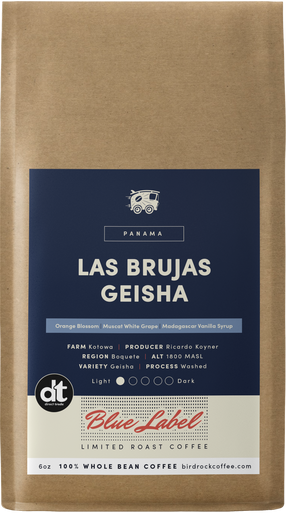
On my second tour, I visited lush Rio Cristal, a Kotowa coffee plantation sitting at an altitude of 1700m. Kotowa represents a century of coffee cultivation in Boquete, managed by the Koyner-Duncan family across multiple generations. Ricardo Koyner leads operations alongside his daughter Victoria, overseeing several estates scattered across different microzones in the region. The farms span 1,200 to 1,850 meters. The varietal portfolio is broad: Geisha, Typica, Pacamara, Caturra, plus heirloom and experimental lines matched to specific elevations and microclimates.
Processing runs the full spectrum. Washed lots provide the baseline, while Natural and honey processes pull different fruit expressions. They also do experimental anaerobic fermentations for select microlots that push into winey, complex territory. The family established one of the region’s early mills, still operational, which gives them control over traceability and microlot separation from harvest through milling.
After a tour of the plantation we cupped 8 different Kotowa coffees, including different roasts (light, medium and dark), Kotowa organic coffee and the Kotowa Geisha, which cups at 91-92 points. As expected, the tasting profile of the Geisha literally blew my taste buds away with its citric flavor. I had never tasted anything like it!
You can visit the Kotowa coffee farm all year round. During rainy season the mornings tend to be dry while the afternoons are generally wet. The harvesting starts in November and lasts until April, so keep that in mind in case you would like to see how farmers are picking the cherries. If you are in town there is a Kotowa Coffee Shop on the main road as well.
 Written by
  Updated on Jan 22, 2026
 I strive to keep all content fresh, but details may change








![Lerida Estate [Lerida 403]](https://moklair.fr/wp-content/uploads/2025/11/moklair2025-mockup-Lerida4032.png)